Who is Gregory Weitsman ?
Dr Gregory Weitsman is a cancer biologist at King’s College London specialising in imaging biomarkers and drug-resistance mechanisms. His work combines advanced microscopy, molecular analysis, and computational modelling to understand tumour heterogeneity and improve patient stratification. He bridges lab science and clinical oncology to advance precision medicine. His work also focuses on developing innovative tools and methods to improve the handling and visualization of delicate 3D biological samples, such as organoids and spheroids, advancing the precision and reproducibility of immunofluorescence workflows.
A device born from delicate samples
During immunofluorescence workflows with 3D structures such as spheroids and organoids, researchers often face a recurring frustration: these delicate samples frequently get damaged, lost, or aspirated during washing, staining, or buffer exchanges. The consequences are familiar, variable labeling, stressed samples, and lost data.
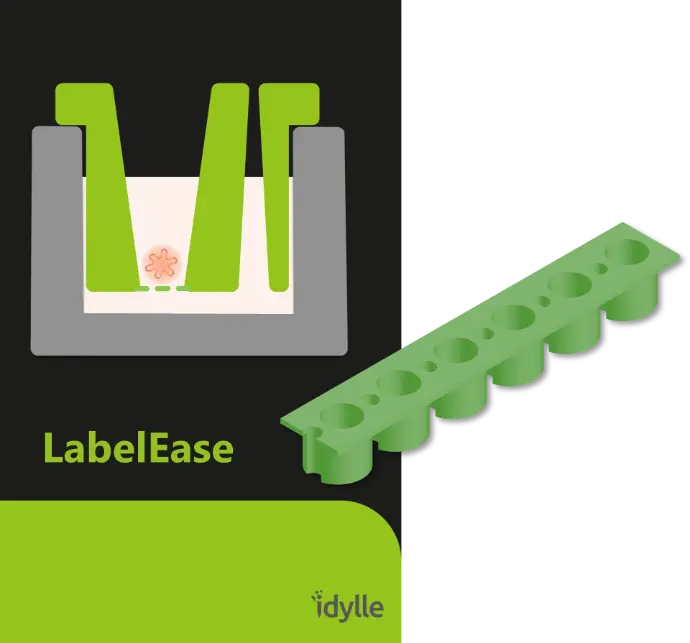
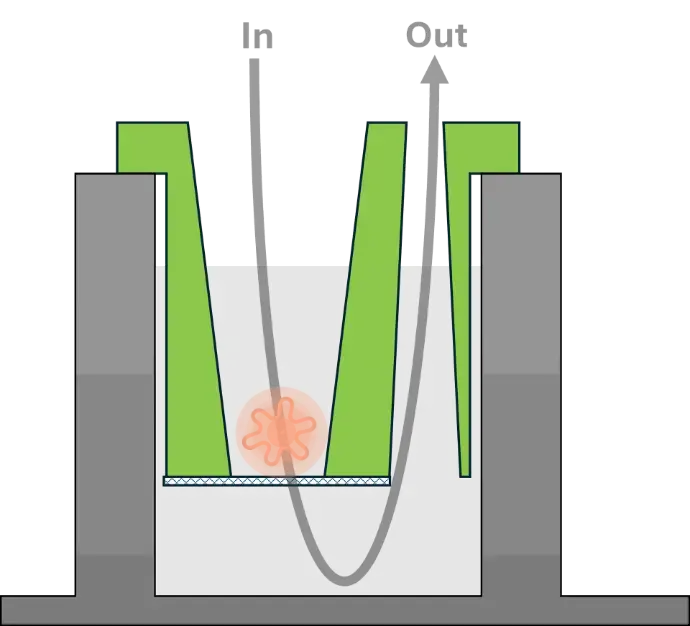
To address this technical challenge for a PhD student in his lab, Dr. Gregory Weitsman designed a dual-opening insert with a mesh bottom that holds the sample in place while allowing fluids to pass through. The goal was simple: handle 3D samples in suspension without damaging them.
How does LabelEase make your labeling workflow easier?
LabelEase is built to simplify immunofluorescence procedures:
- The insert has two openings: one for loading samples and reagents, the other for gentle removal of solutions.
- A mesh (100 μm pores) supports the sample while liquids flow through.
- It fits as a rack of 6 inserts in a 48-well plate, making it compatible with standard lab equipment.
- Reusable and designed to eliminate repeated centrifugation steps and reduce sample loss.
Your Workflow, Smarter
No more chasing sinking organoids, or risking sample loss during wash steps. LabelEase brings a gentle, standardized method to immunostaining 3D samples, improving reproducibility and preserving structure.