- All Products
- EasYeast - Yeast DNA extraction
EasYeast - Yeast DNA extraction
https://www.idylle-labs.com/shop/easyeast-574 https://www.idylle-labs.com/web/image/product.template/574/image_1920?unique=e77071bQuick method for yeast DNA extraction
New version available !
Discover EasYeast 2.0, delivering twice the yield of extracted DNA for ultra-efficient extraction workflows
A technology developed by Jean-Luc Evrard (IBMP, CNRS, France)
EasYeast is a kit for yeast DNA extraction. It is based on an innovative lysis buffer optimized to efficiently break up yeast cell wall at moderate temperatures without the need for harmful organic solvents, expensive enzymes or mechanical rupture. Leading to efficient genomic and extra-chromosomic DNA recovery, EasYeast was designed to simplify yeast DNA extraction protocols by providing a simple and versatile method you can easily scale-up according to your needs.
EasYeast at a glance
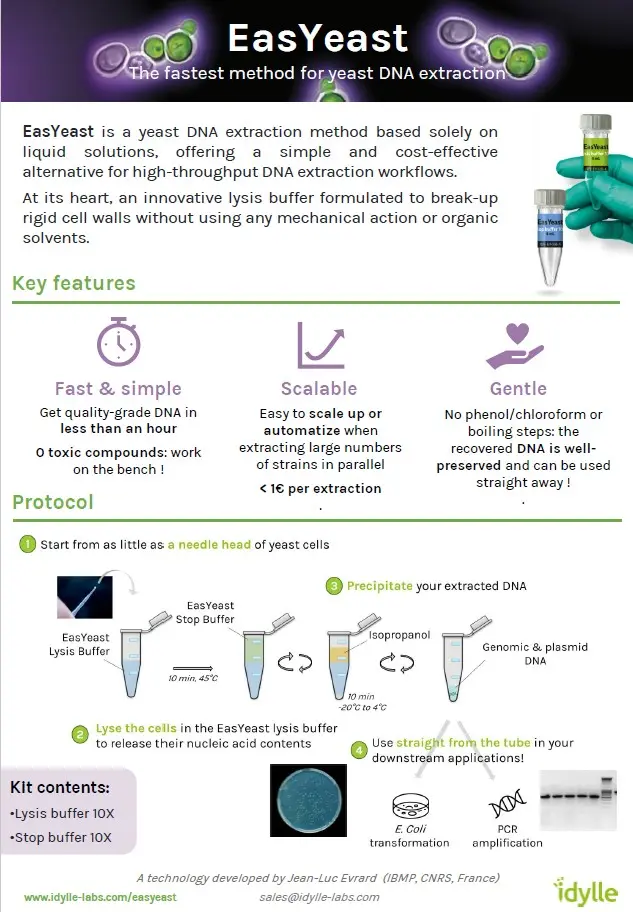
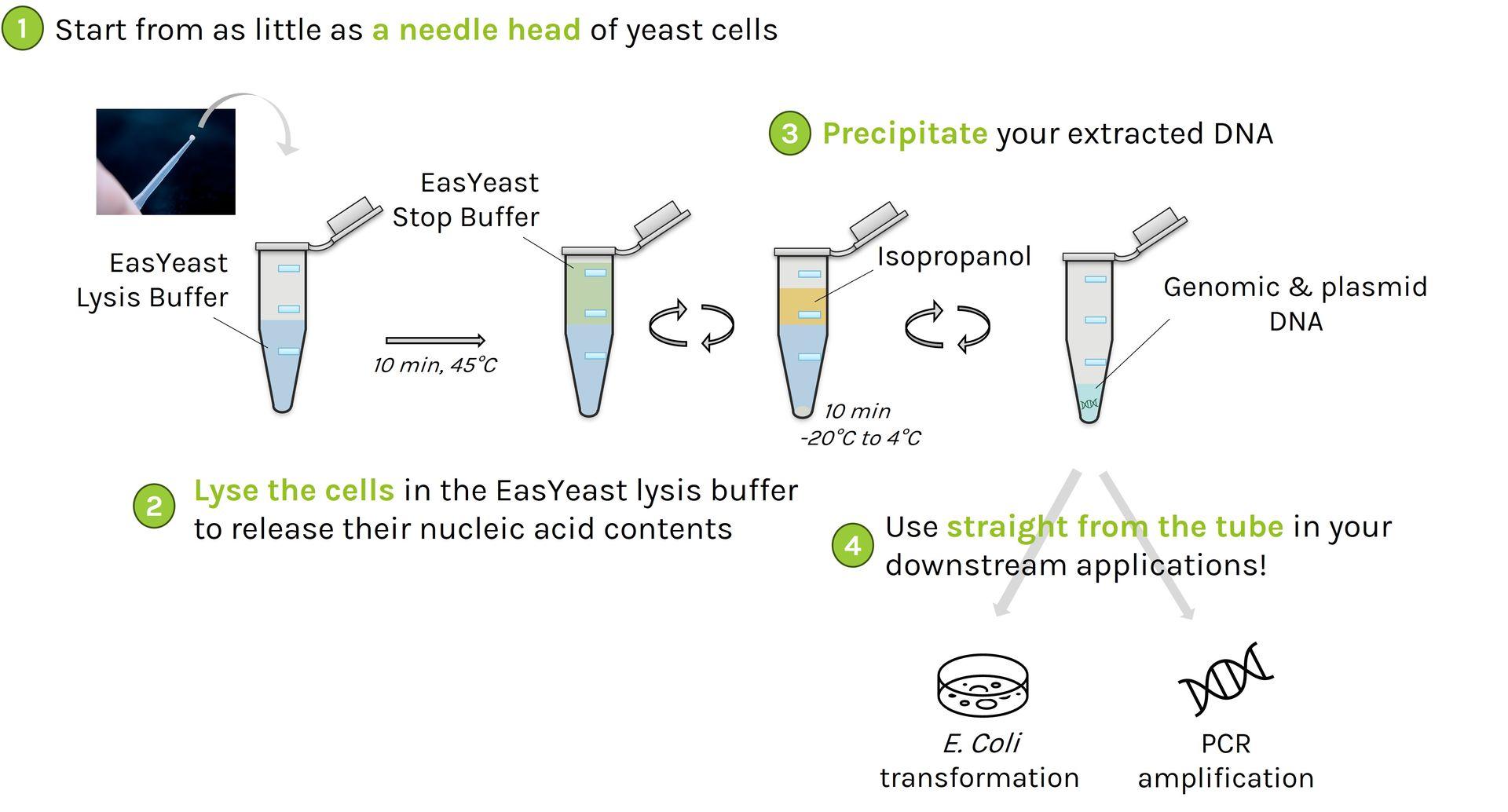
.
Go faster
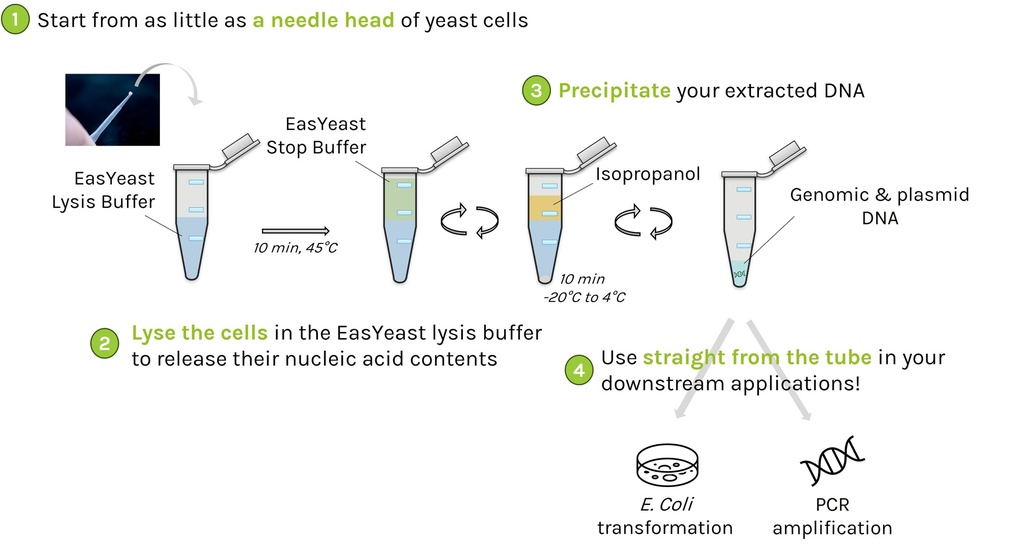
Only 2 ready-to-use solutions, 3 simple steps, and a total time under 1 hour. The most straight-forward method for yeast DNA extraction!
Get high-quality DNA
With no SDS, phenol/chloroform or boiling steps, the EasYeast method best preserves the extracted DNA integrity and minimizes the risk of recovering contaminants that may interfere with downstream applications. No need for purification columns, use it straight away for PCR or bacterial amplification!
Scale-up your DNA extraction process
Based solely on non-toxic aqueous solutions, EasYeast does not require the use of bead beating, columns or sophisticated equipments. The extraction protocol can be easily implemented in 96-well plate formats or automatized and is your solution of choice where large numbers of samples need to be extracted.
Applications
EasYeast is polyvalent: only 1 kit covering all your yeast experiments
- Quickly extract extra-chromosomic DNA (i.e. plasmid, YAC) directly usable for PCR amplification and bacterial transformation (cloning/subcloning, recombinant protein expression, library screening, double-hybrid assays, etc).
- A method of choice for a cost-effective extraction of genomic DNA suitable for PCR amplification. Compatible with affinity-based purification methods, EasYeast can also be easily integrated within existing experimental workflows when ultra-pure DNA is needed.
EasYeast 1.0
down to
0.42€ / extraction
- Small kit (300 extractions):
- 1.2 mL Lysis buffer 10X
- 1.2 mL Stop buffer 10X - Large kit (1000 extractions):
- 4 mL Lysis buffer 10X
- 4 mL Stop buffer 10X
EasYeast 2.0
down to
0.90€ / extraction
- Small kit (300 extractions):
- 2.4 mL Lysis buffer 2.0 5X
- 1.2 mL Stop buffer 10X - Large kit (1000 extractions):
- 8 mL Lysis buffer 2.0 5X
- 4 mL Stop buffer 10X
Storage
The Lysis buffers, as they are or diluted to 1X, should be stored at -20°C if not used immediately.
The 10X Stop buffer can be stored at room temperature for up to 2 months. For long-term storage, store at -20°C.
Both buffers can be stored at -20°C for a year.
Extracting yeast plasmids for bacterial transformation
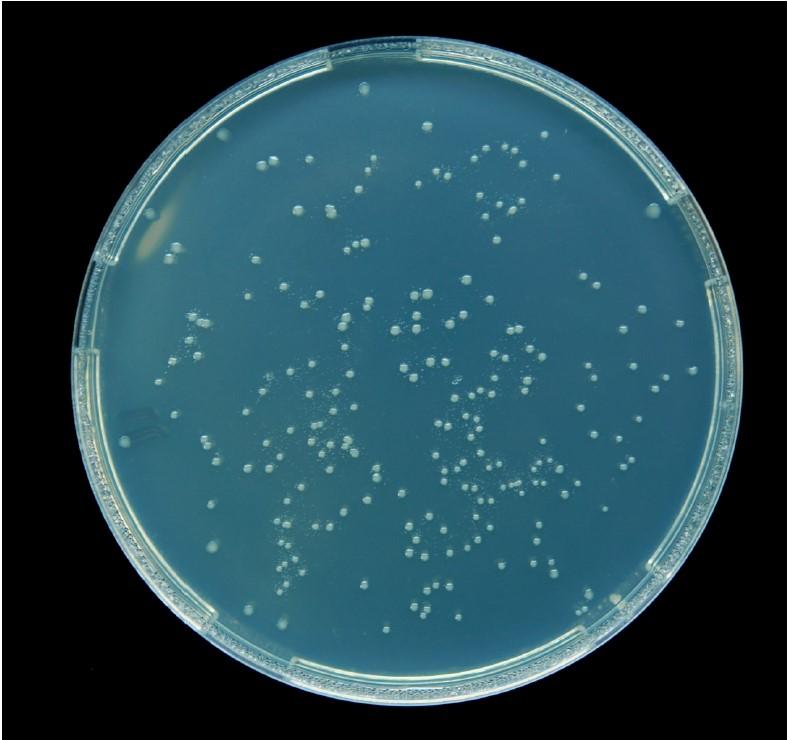
Plasmid DNA (pGADT7) was extracted from S. cerevisiae using EasYeast and used for E. coli transformation by electroporation.
Credits: Jean-Luc Evrard (IBMP, CNRS, France)
Extracting yeast genomic DNA for PCR amplification
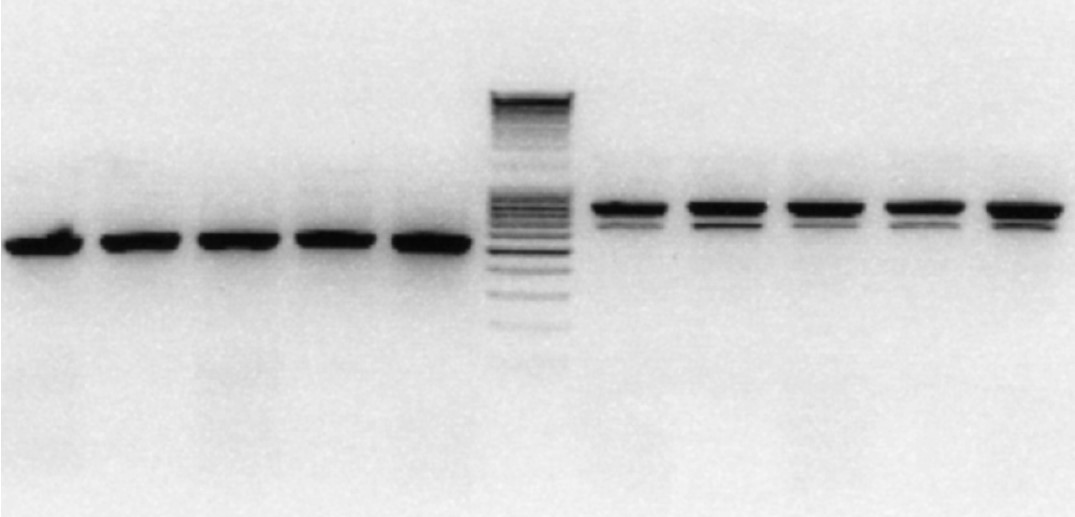
Genomic DNA extracted with EasYeast was used for SNA3 (left) and PDR5 (right) gene amplification by PCR. PCR products were run on an agarose gel after 30 cycles.
Credits: Jean-Luc Evrard (IBMP, CNRS, France)
Enhanced plasmid DNA extraction efficiency using EasYeast 2.0
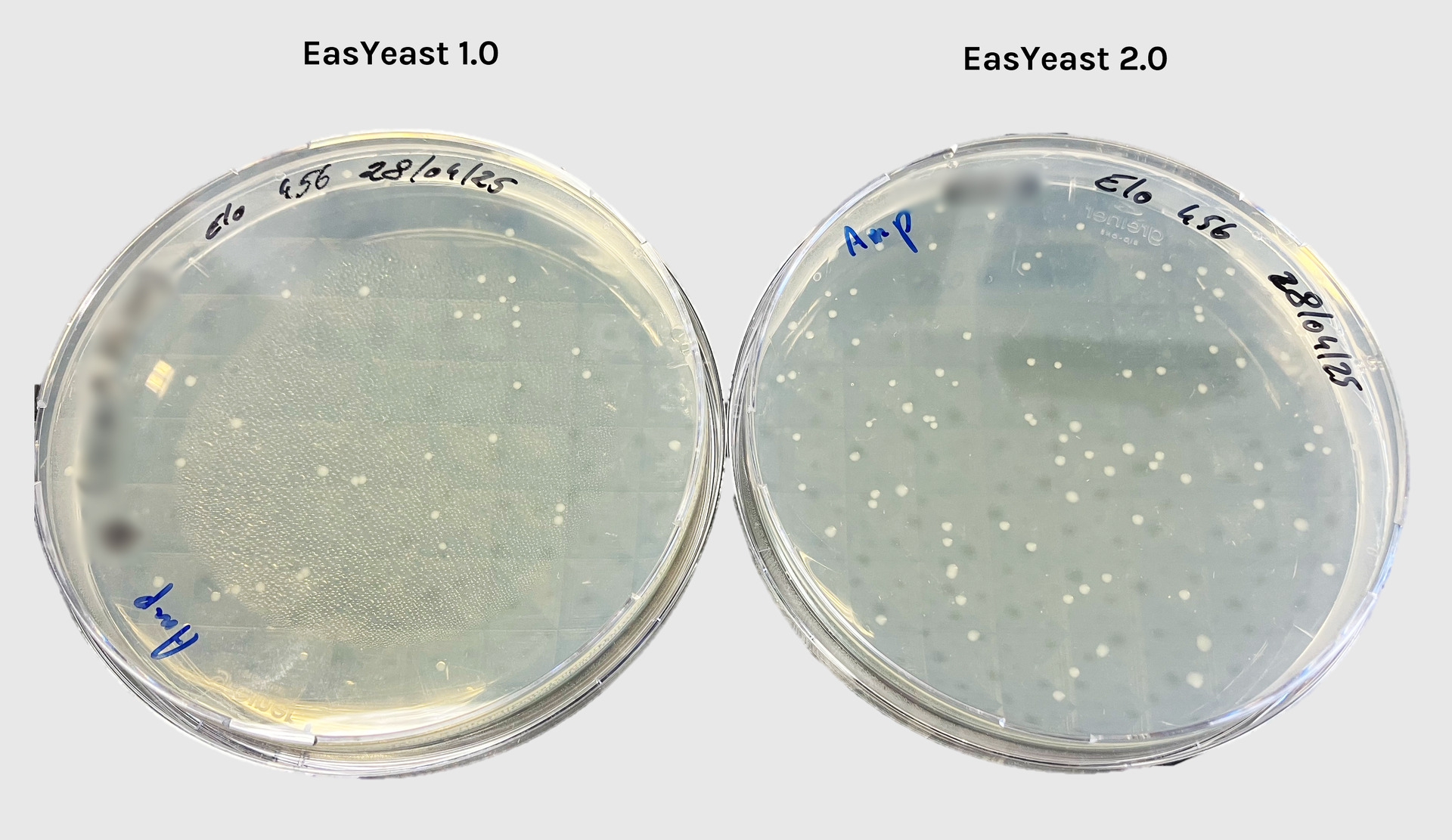
Plasmid DNA was extracted using EasYeast 1.0 (left) or EasYeast 2.0 (right) from S. cerevisiae and used straight after extraction for transformation by electroporation in e.coli. The EasYeast 2.0 kit provided a 2.3-fold increase in the number of obtained transformants.
Credits: Jean-Luc Evrard (IBMP, CNRS, France)
As a general rule, EasYeast should work for all species with a cell wall mainly composed of peptidoglycan and/or glucans due to the physico-chemical properties of the lysis buffer (i.e. yeast, gram + bacteria). It seems to be less efficient with cell walls mainly composed of chitin (i.e. filamentous fungi).
So far, EasYeast has been successfully used to extract DNA from Saccharomyces cerevisiae, e.coli and Streptomyces. It may be used with other species, although the optimal temperature and/or duration of the lysis step might need to be adjusted.
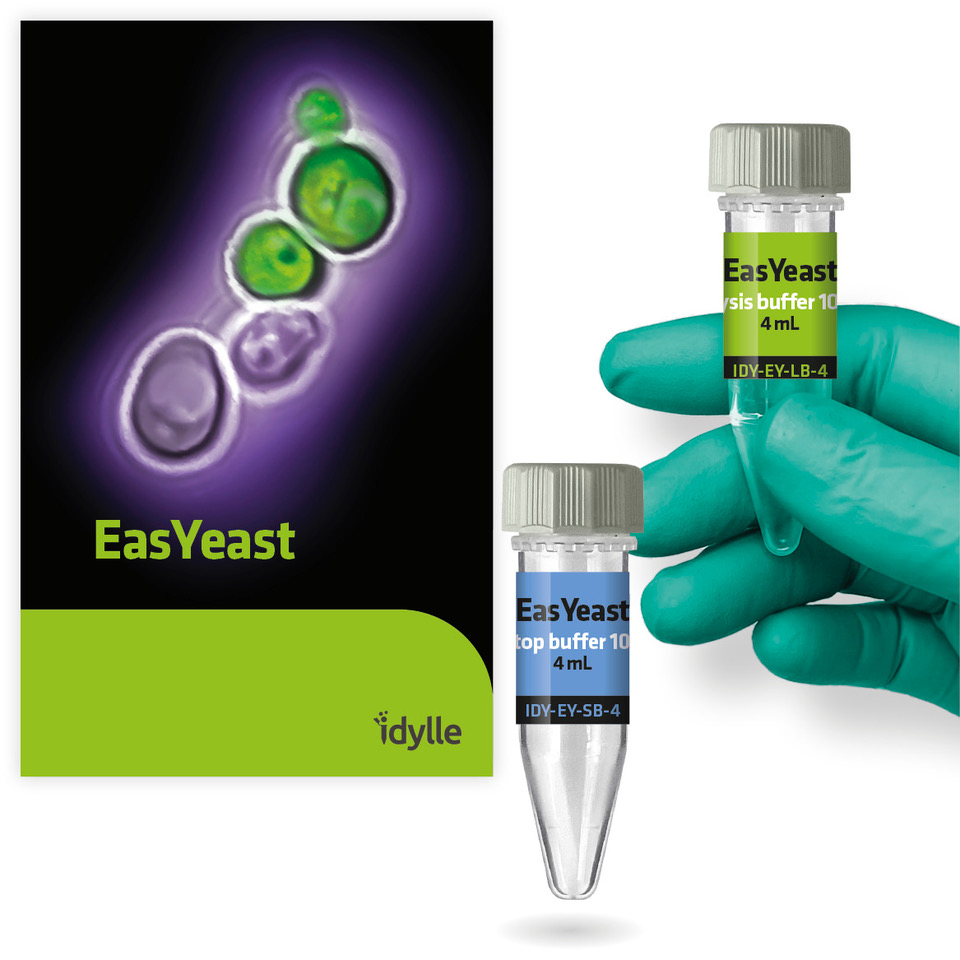
The EasYeast kits contain a Lysis buffer and a Stop buffer. All you need to provide on your side is some ultra-pure water (milliQ or molecular-grade), a centrifuge (ideally refrigerated, but a benchtop centrifuge will work too) and a way to heat-up the solutions at 45°C (thermocycler, water-bath or heating block). Some isopropanol may be needed if you wish to precipitate the DNA at the end of the protocol.
Because the EasYeast solutions do not contain any SDS or phenol/chloroform, and the RNA gets mostly degraded upon lysis, a simple precipitation in isopropanol is sufficient to provide a functional DNA you can use directly for bacterial transformation using electroporation or PCR amplification.
If ultra-pure DNA is required, an affinity-based purification can be performed instead of the alcohol precipitation. The EasYeast lysis and stop buffers are compatible with purification methods based on silica (i.e. NucleoSpin® from Macherey-Nagel or QIAprep Spin Miniprep Kit from Qiagen) and aluminium oxide membranes, diatomaceous earth particles, carboxylated or silica magnetic beads, polymers (i.e. polyethyleneimine) or specialized chromatography resins (i.e. DEAE cellulose).
We do not recommend using the EasYeast kit for RNA isolation, as it will be mostly degraded by the lysis buffer components. This kit is primarily intended for DNA extraction.
Lots of home-made methods have been developed, that are also quick, cheap and easily scalable. In comparison, the EasYeast method was designed to better preserve the integrity of the extracted DNA: it does not use any SDS, and incubation temperatures do not exceed 45°C. As DNA is less fragmented at 45 °C, you can recover high-quality nucleic acids for downstream applications and get functional plasmids for bacterial transformation. The absence of SDS also minimizes the risk of interference with PCR or spectrophotometric DNA quantification. And of course, we know time is precious: with EasYeast, you'll have all solutions ready-to-use instead of having to make all of them every time.
So far, DNA extracted using EasYeast has mostly been used for PCR amplification and bacterial transformation. That being said, the protocol is easily adjustable according to your needs:
- if RNA-free genomic DNA is needed, RNase A can be added to the lysis buffer before adding the yeast.
- the number of cells used for DNA extraction can be scaled up according to the desired yield of DNA, as long as the recommanded ratio between cells and lysis buffer is maintained.
- if ultra-pure DNA is needed, an affinity-based purification can be performed instead of the alcohol precipitation. The EasYeast lysis and stop buffers are compatible with purification methods based on silica (i.e. NucleoSpin® from Macherey-Nagel or QIAprep Spin Miniprep Kit from Qiagen) and aluminium oxide membranes, diatomaceous earth particles, carboxylated or silica magnetic beads, polymers (i.e. polyethyleneimine) or specialized chromatography resins (i.e. DEAE cellulose).
